Remember when we were kids and our parents and teachers taught us a little safety information about crossing a street? They said look left, then right, and then left again. Left comes first because the traffic in the U.S. is right lane (right hand) traffic which means vehicles are expected to be traveling from our left to our right when we are standing curbside. The same instruction holds true when operating forklifts and other traveling machinery.
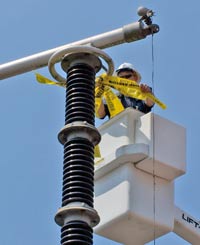
Another very important place to employ this triple peek is when using an aerial work platform. Before elevating, we should look up, then down and then keep looking up until we quit raising the platform. Crushing accidents can occur when platform operators are looking down and over-the-side while raising the platform. The operator can crush himself into overhead obstructions or ceiling trusses. Focus on the most immediate hazard while having knowledge of your surroundings.
Remember; left-right-left and up-down-up.
Happy trails to my crane and rigging friends,
Mike Parnell
President, ITI-Field Services
PS. The ITI Bookstore has a very large section on Heavy Equipment Resources for you to ensure that your in-house heavy equipment safety training is up to date.