
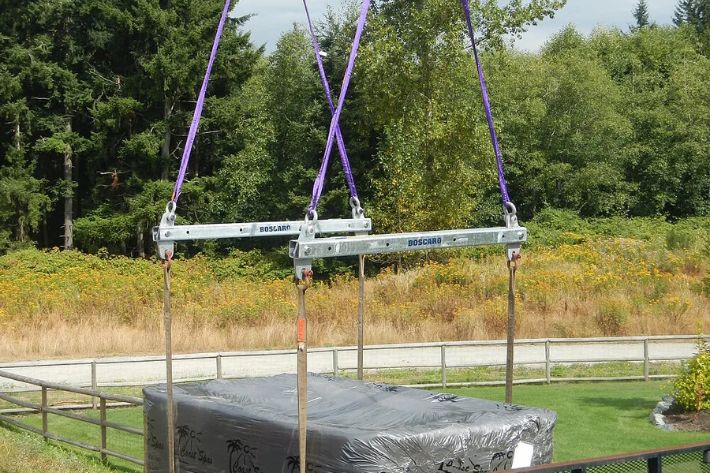
When testing a crane or other lifting device, make sure the tools used in the testing procedure are Certified and have been tested as well.
The rule is that all lifting gear must be tested with a test load depending on the SWL of the lifting gear. There are only a few exceptions, which involve one offs, used for lifting extreme heavy structures. In that case a detailed stress analysis must be handed over to the classification society for review and Certification.

Apparently the design of this spreader had not been tested nor the design been reviewed by a qualified engineer, as it failed when the crane lifted the proof load with spreader.

It was obvious that this was not going to last very long, as the center water weight bags were attached to the center of the beam between the lift points, and obviously the bending moment exceeded the max. allowable stresses with the result of the collapse of the spreader frame.

Another unnecessary incident that could have been avoided easily, in case someone had taken the initiative to ask the right questions, before the job was done.
Author; Unknown
Source: