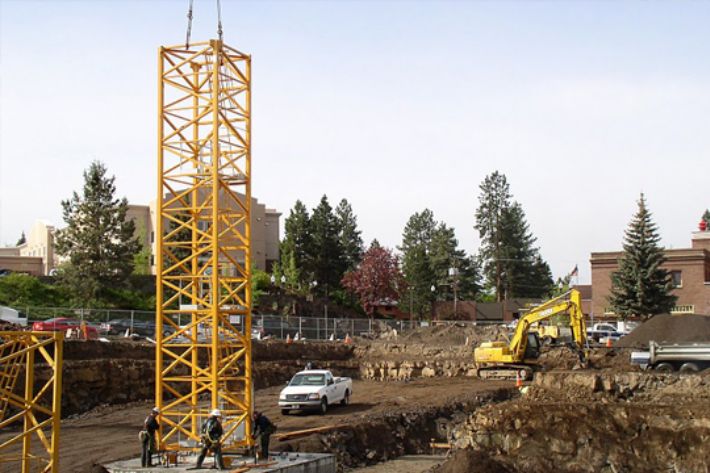

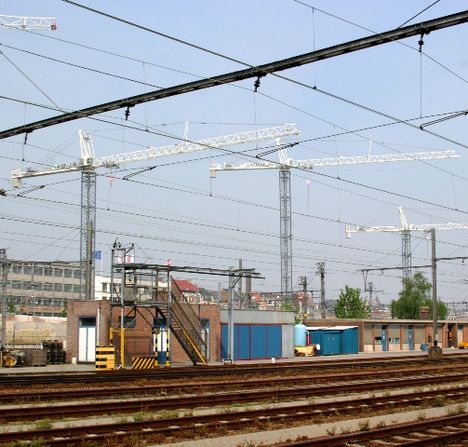
The UK’s Construction Plant-hire Association (CPA) has published a good practice guide for tower cranes working alongside railways.

CPA has published guidance for tower cranes working alongside National Rail railways
Produced by CPA’s Tower Crane Interest Group in conjunction with Network Rail, the ‘Requirements for Tower Cranes alongside Railways Controlled by Network Rail’ document has been prepared to provide clarity about tower cranes over-sailing rail lines and infrastructure.
The guidance states that where it is necessary to carry out lifting operations over or adjacent to a live railway line, and in all circumstances where a tower crane and its load can collapse within four metres of a railway asset or property boundary, Network Rail must be consulted at the earliest stage of planning.
Requirements include positioning the crane behind a building or other suitable obstacle preventing it falling on to the railway, using mast guys and using a secondary tower as well as tying the cranes to an adjacent structure if possible.
The full guidance can be downloaded from CPA’s website: www.cpa.uk.net/news-events/httpwwwcpauknettower-crane-interest-group-tcig/
Author; Unknown
Source: