 In this issue of the Professional Rigger, let’s evaluate an accident. Read the case study to the right and identify the improper practices based on the list given. Answers provided below.
Runaway Pipe Accident Scenario
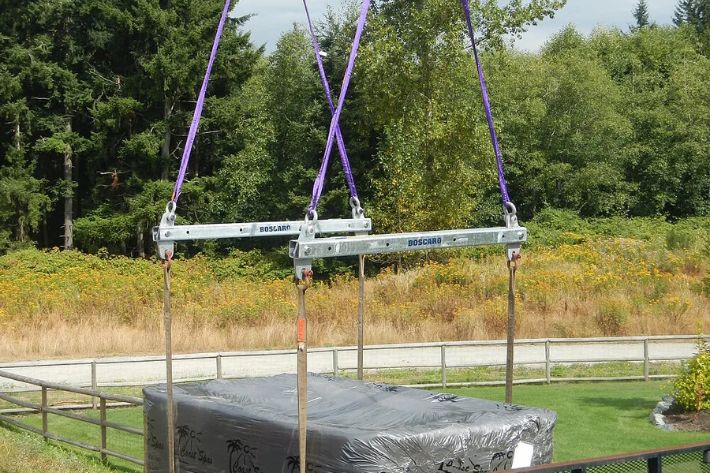
A mobile crane operator and rigger placed two chain slings in choker hitches around a steel pipe. The pipe was 3 ft in diameter, 40 ft long with a 1/2 inch wall.
The chain slings were 9/32 inches Grade 7, and 20 ft long, with a master link at one end and standard sling hooks at the other. The two slings were rigged at 45 degrees from horizontal, straddling the pipe’s midpoint.
Intending to load the pipe from the ground to a flatbed trailer, the rigger gave a thumbs-up signal to lift the load. He held the end of the pipe to steady it as it raised up approximately 7 ft.
The operator swung the pipe towards the truck. The end of the pipe, opposite the rigger, struck the headache rack on the back of the semi tractor. The pipe slid out of the slings towards the rigger striking and crushing his right leg. The pipe tumbled away from the trailer towards the crane, impacting the crane’s back right outrigger.
Which improper crane and rigging practices are evident in this scenario?
- Wrong chain grade
- Improper signal
- Rigged too flat, 60 degree maximum for choker hitches
- Shock load
- No wear pads
- Insufficient cribbing under crane
- Operator swung without signal
- Load too high
- Man under suspended load
- Insufficient blocking under load
- Crane hook too big
- Pipe too heavy for crane
- Wrong size chain even if Grade 8
- Overhead power lines too close
- No tag line
Happy trails to all my crane and rigging friends,
Mike Parnell
ITI-Field Services
P.S. This article was originally published in The Pro Rigger – Rigging Training Workshop: Accident Evaluation.
Answers:
1, 2, 3, 4, 7, 8, 9, 13, 15